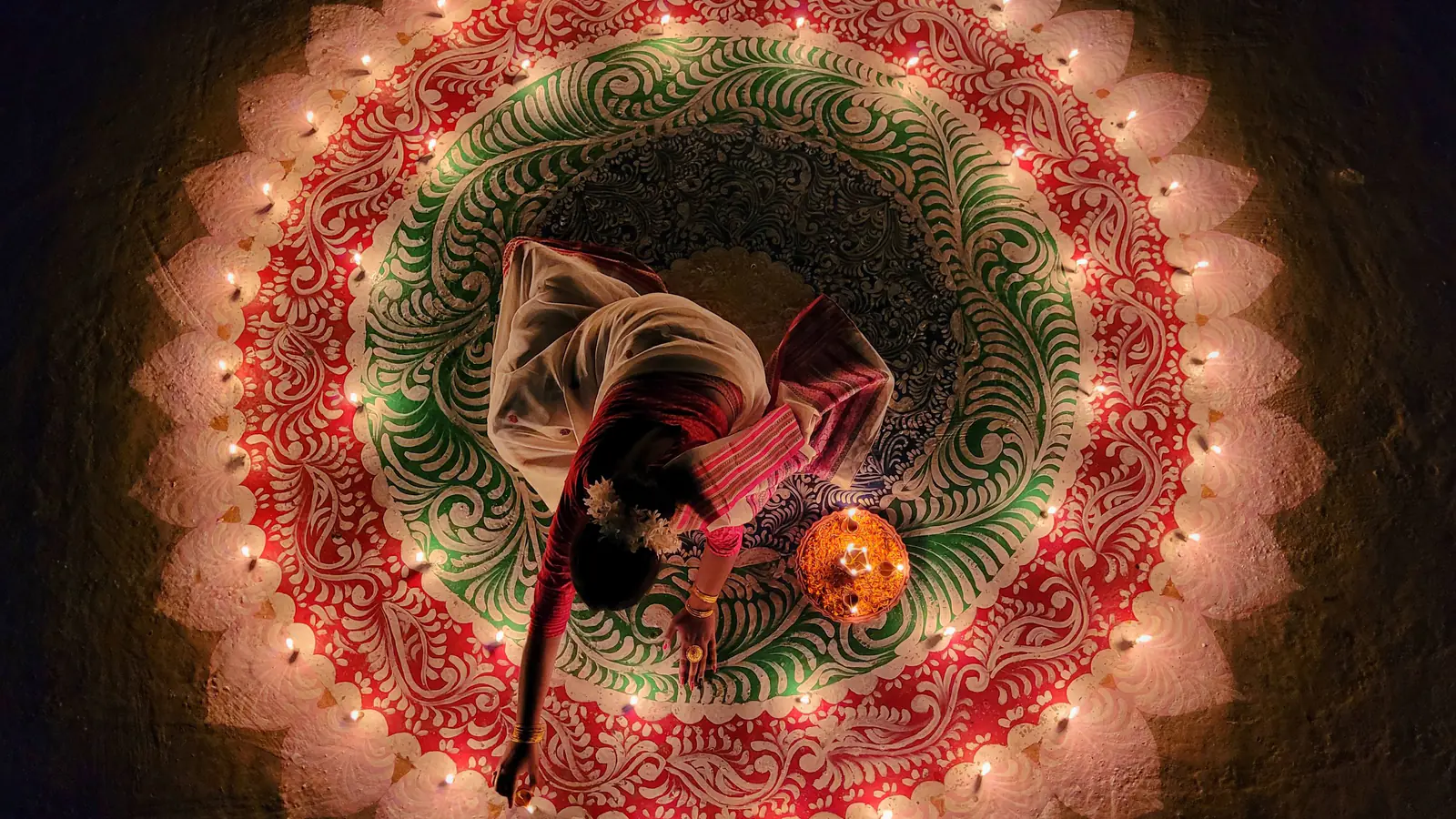
Start here
New to Hinduism? Start here.
Twelve short pages that explain the ideas, the gods, the practices, and the calendar in plain words — and a seven-day path that turns them into a habit. Nothing here asks you to believe anything; it asks you to look.
No account. Nothing to sign. Your choices stay on this device.
12 pages · about 2 minutes each
Twelve pages, in order
Each page is one idea, one picture, one verse, and — where it helps — one diagram. Two minutes each.
- Page 1 of 12What Hinduism isA family of traditions from India, more than three thousand years old, with no single founder, book, or church.
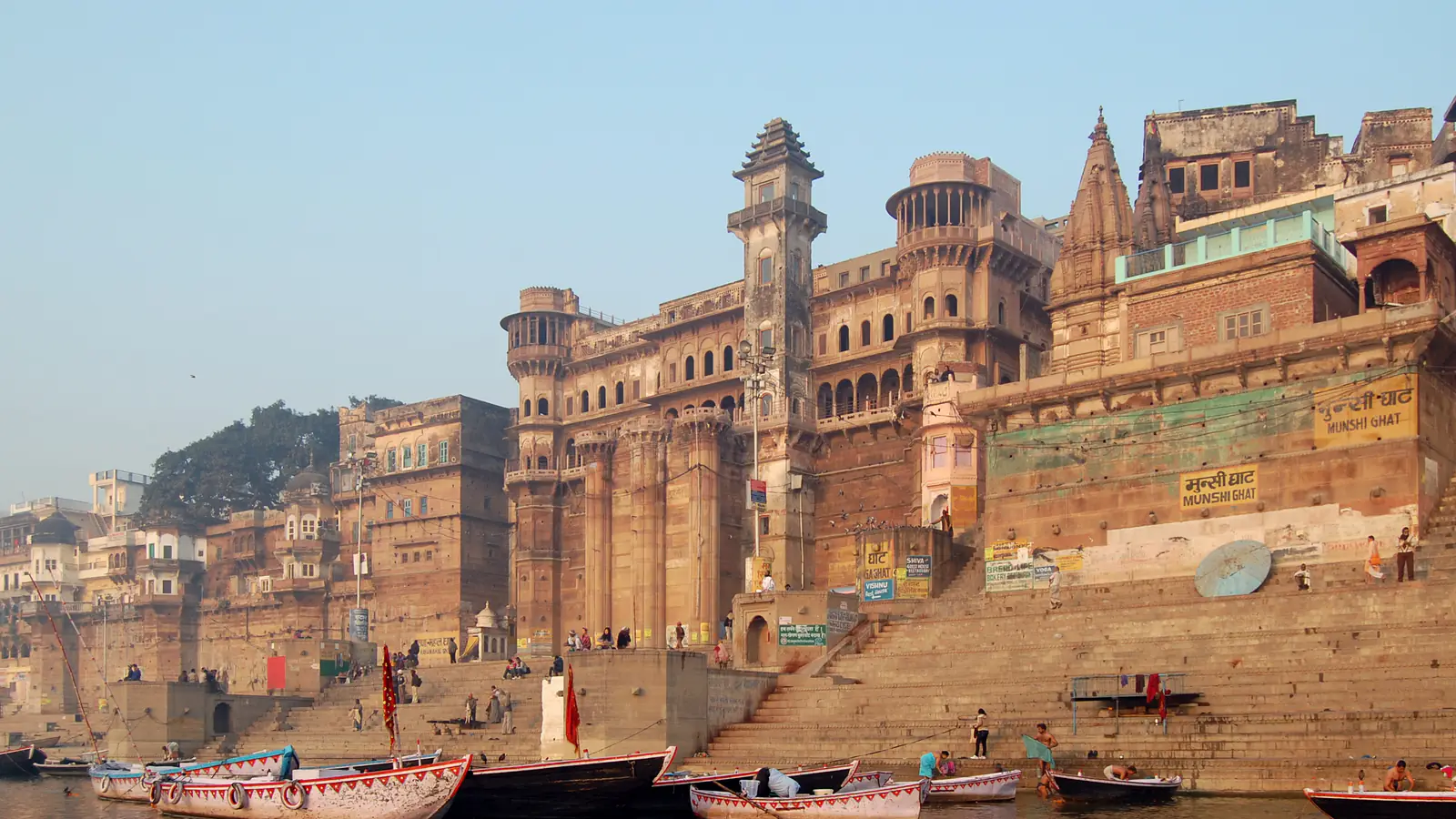
- Page 2 of 12Four words that carry everythingDharma is right living, karma is action and its consequence, samsara is the cycle of rebirth, and moksha is freedom from it.
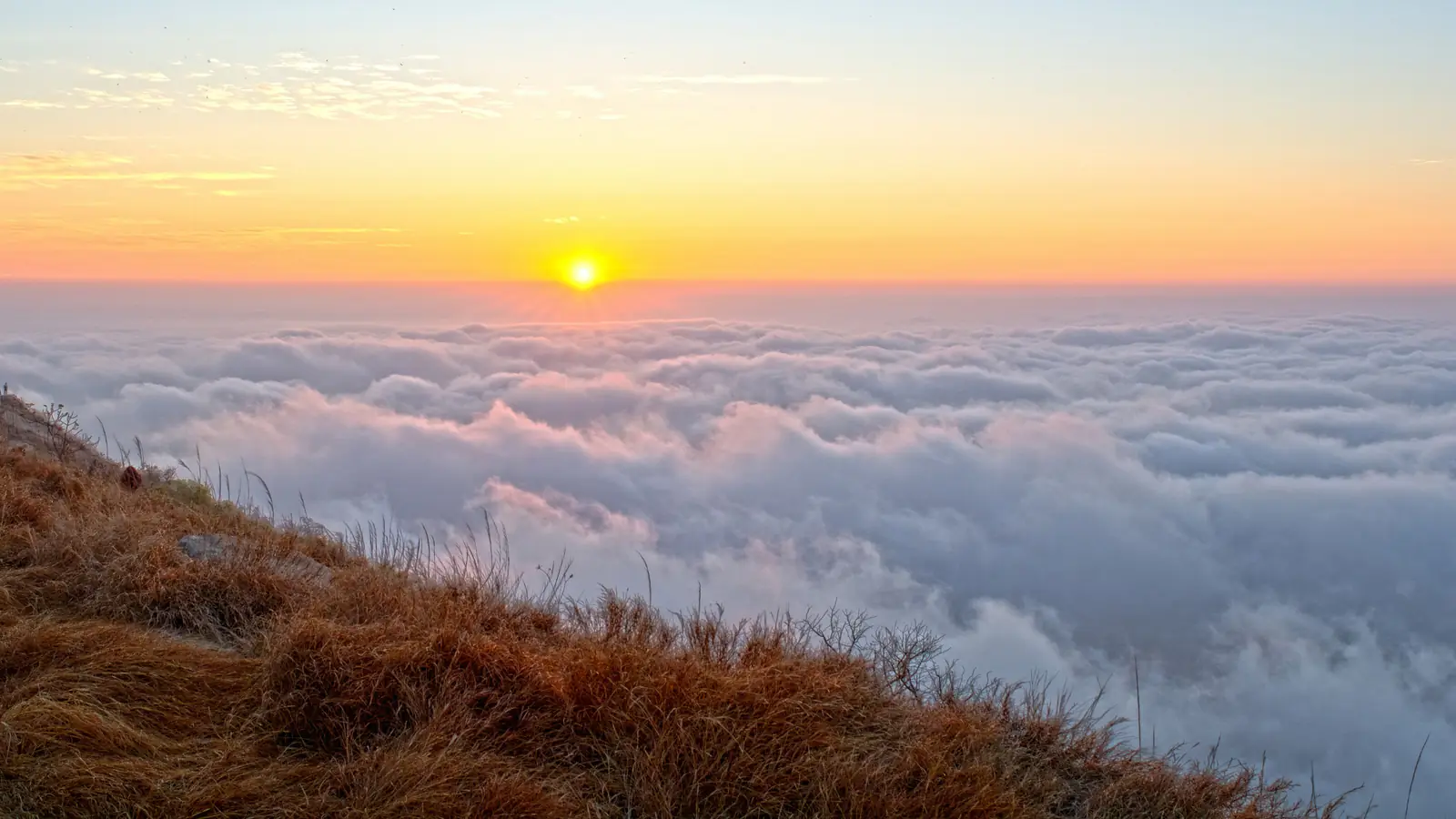
- Page 3 of 12One truth, many godsHindus can worship many deities and still speak of one reality, because the deities are the faces through which that reality is approached.
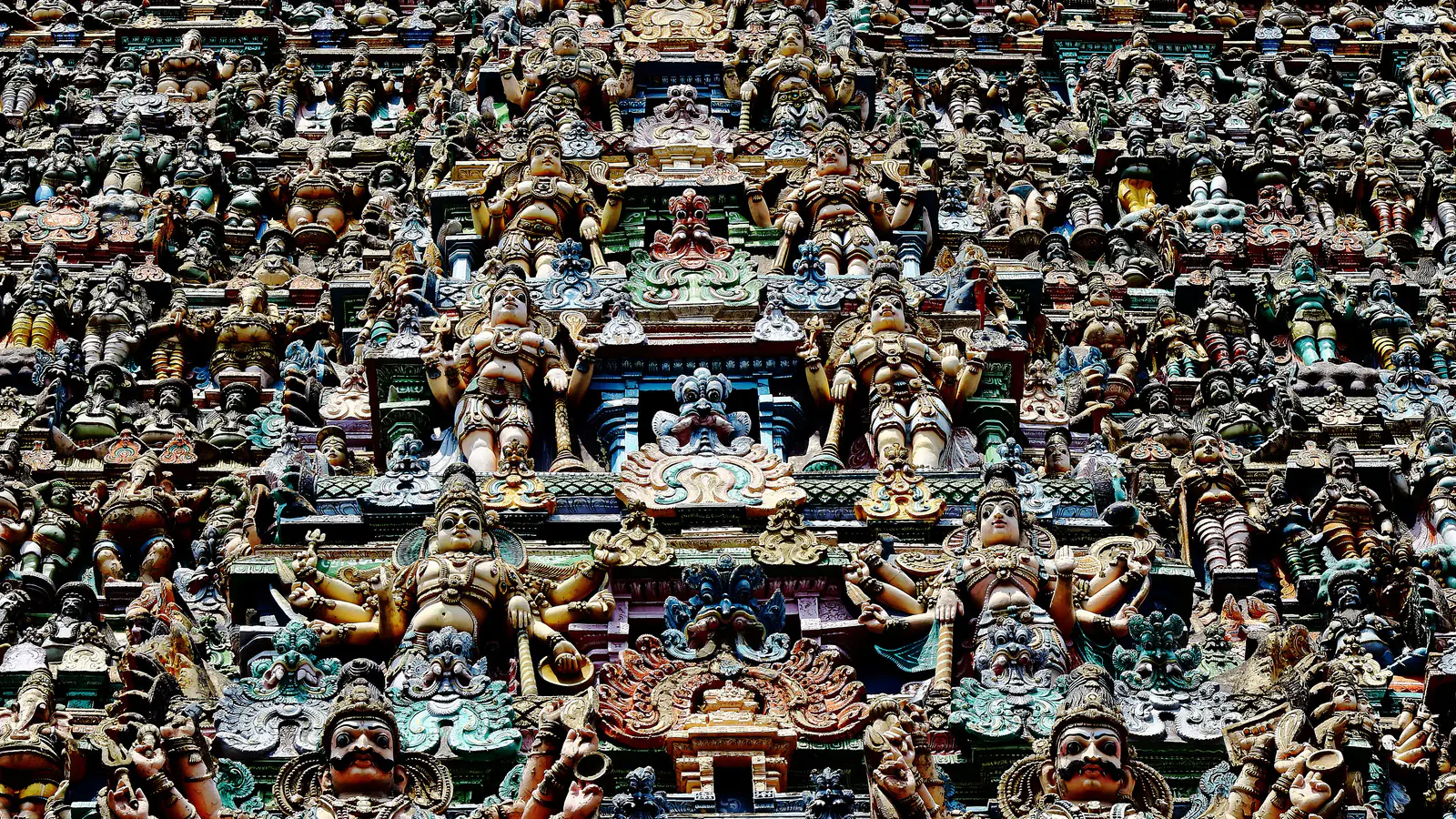
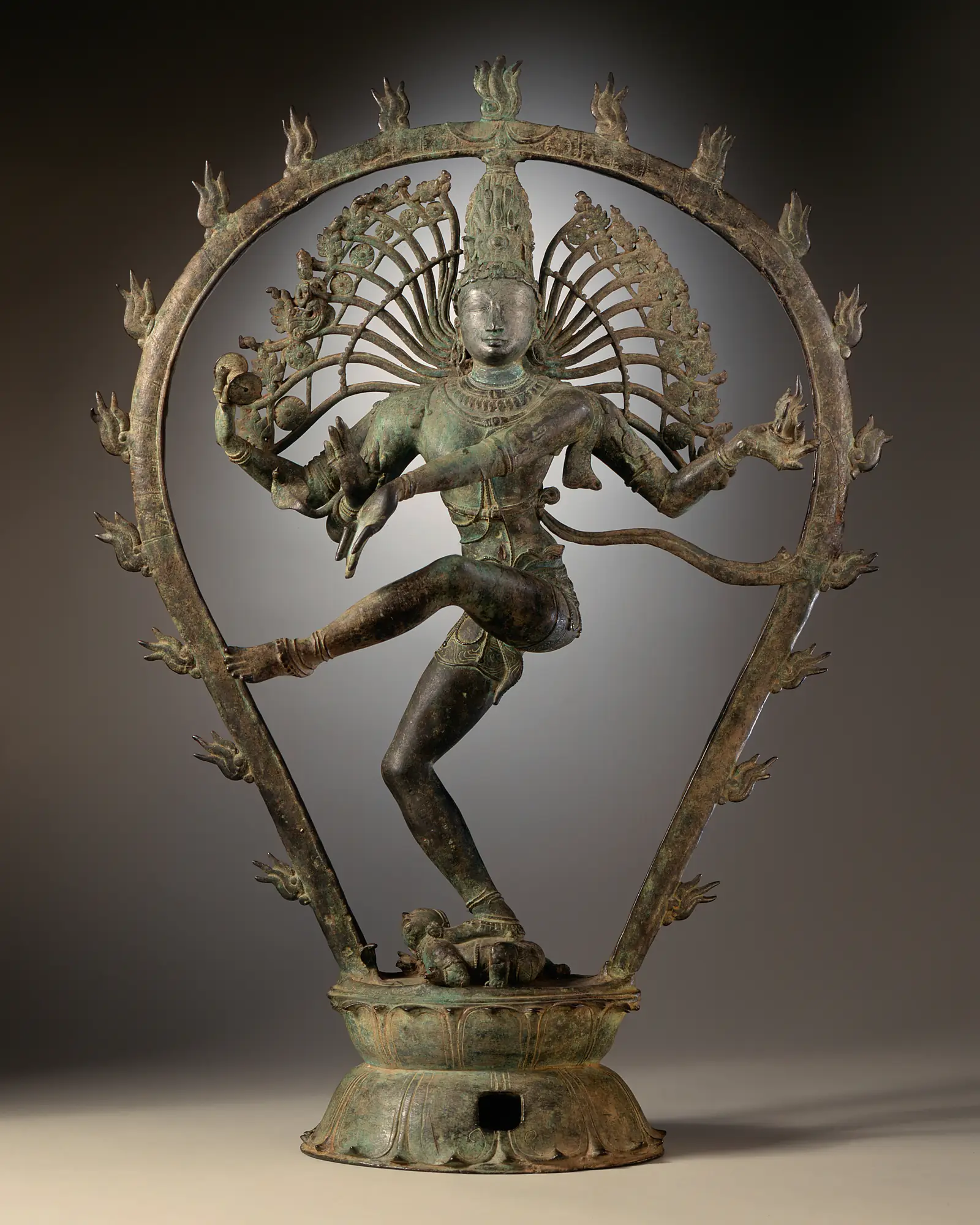
- Page 4 of 12The deities you will meet firstFifteen names cover most of what you will see in homes, temples, and festivals.
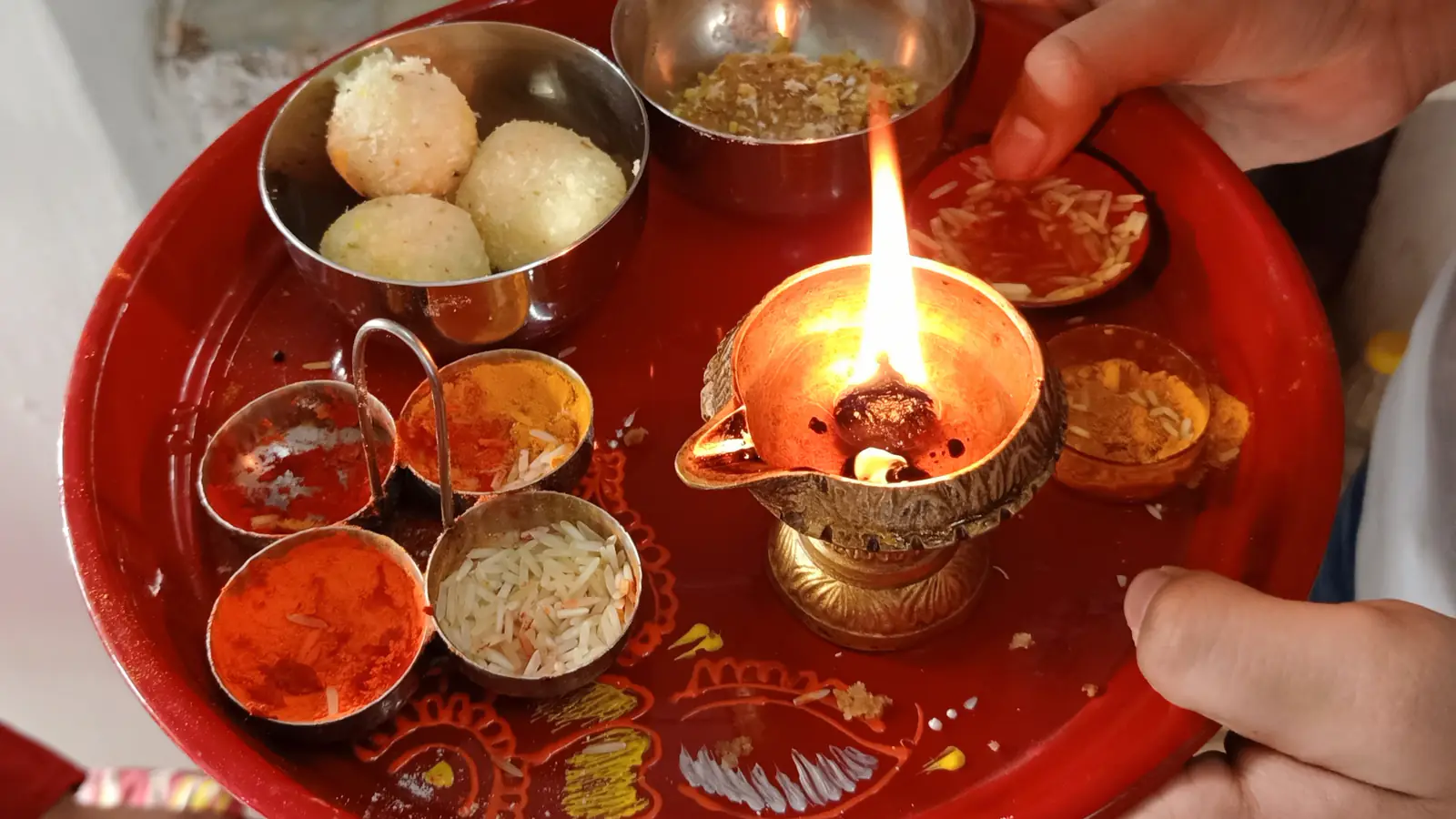
- Page 5 of 12Puja: how worship worksThe deity is treated as an honoured guest — invited, seated, bathed, dressed, fed, and shown a lamp.
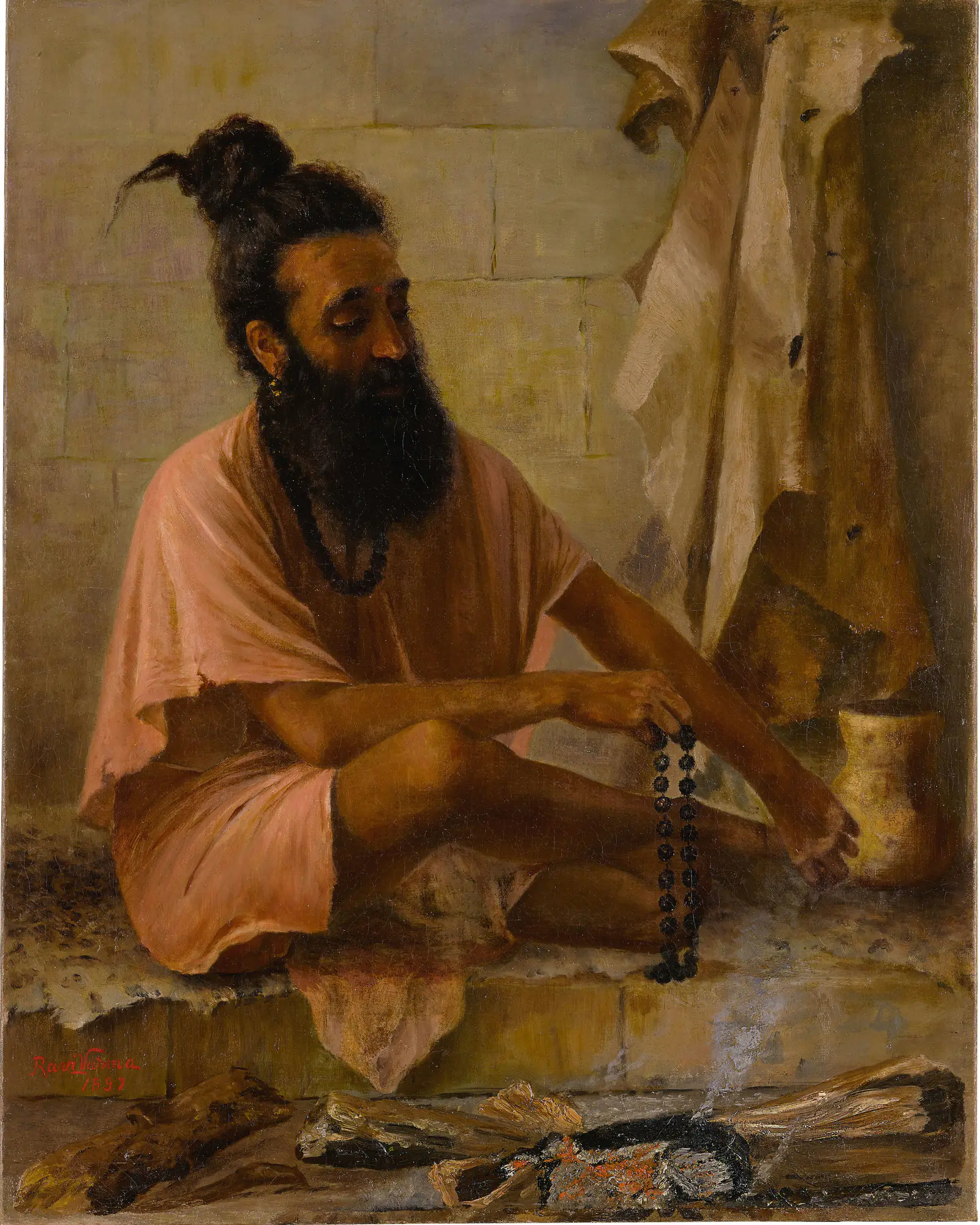
- Page 6 of 12Mantra and japaA sacred phrase, repeated with attention — usually 108 times, counted on a string of beads.
- Page 7 of 12Om, and why it is everywhereThe syllable Hindus place at the beginning of nearly everything.
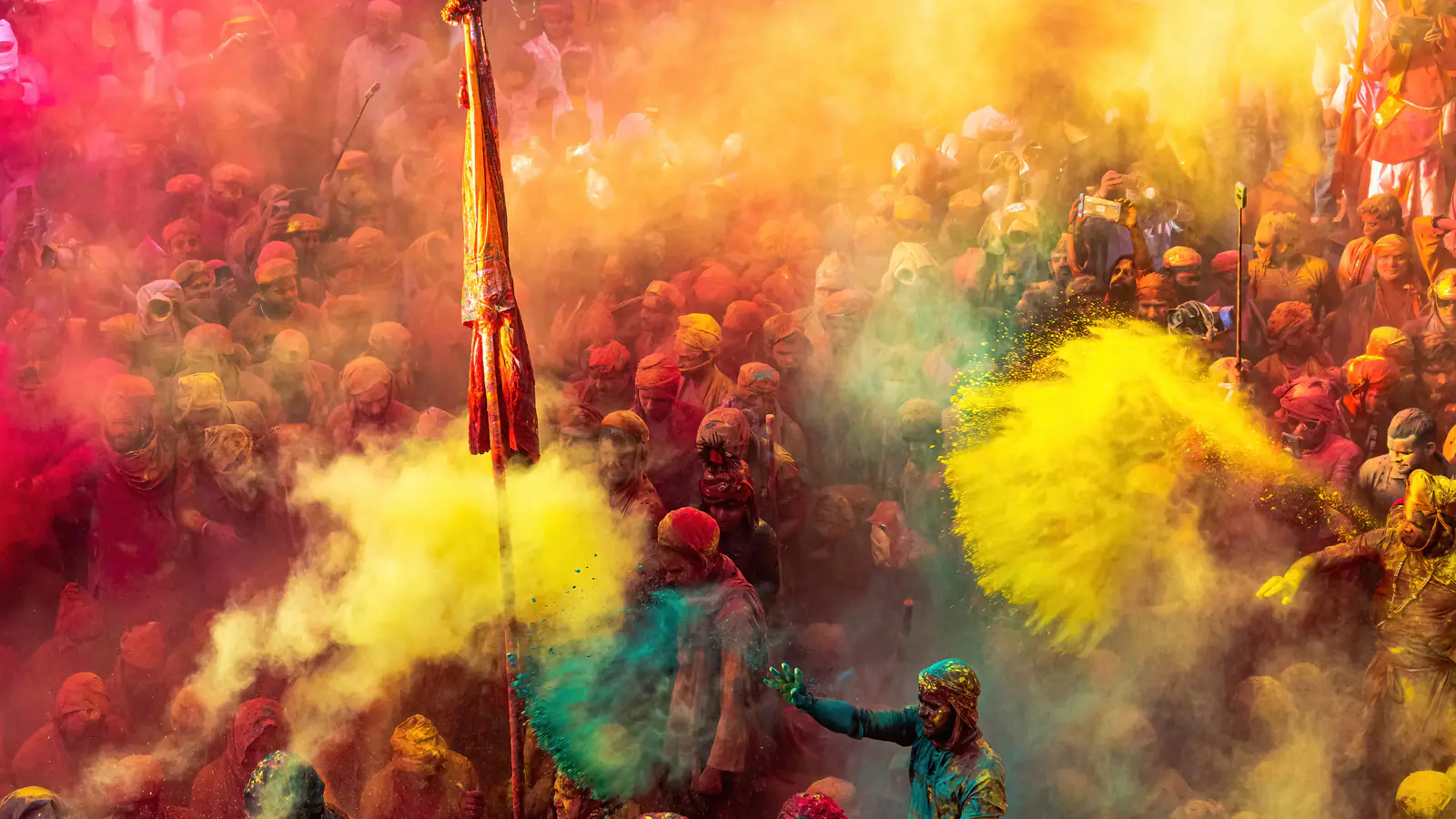
- Page 8 of 12Festivals, and why the dates moveHindu festivals follow the moon, so they land on different days each year.
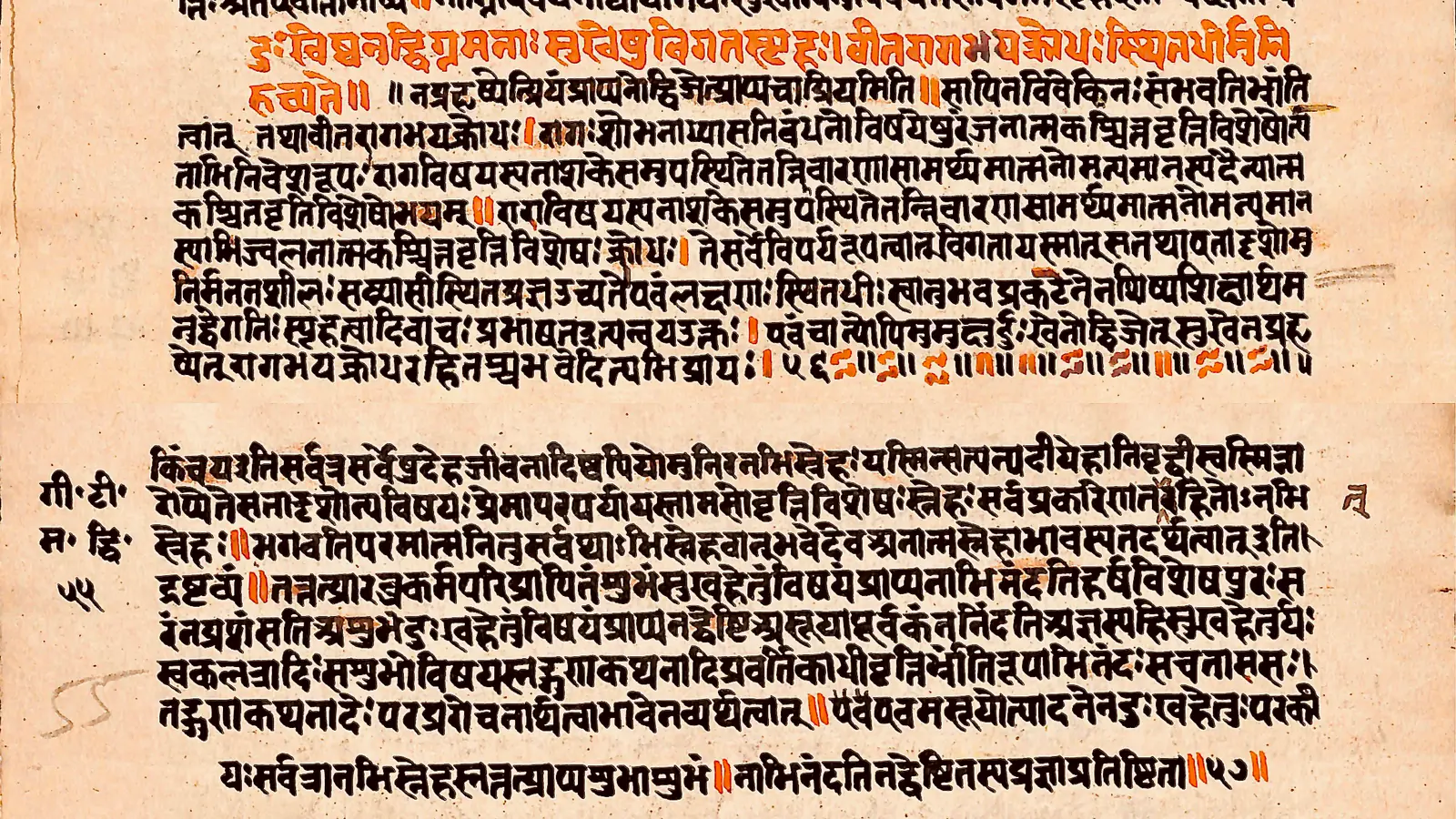
- Page 9 of 12The scriptures, in one pageThe Vedas at the top, the epics and Puranas beneath them, and the Gita as the book most people start with.
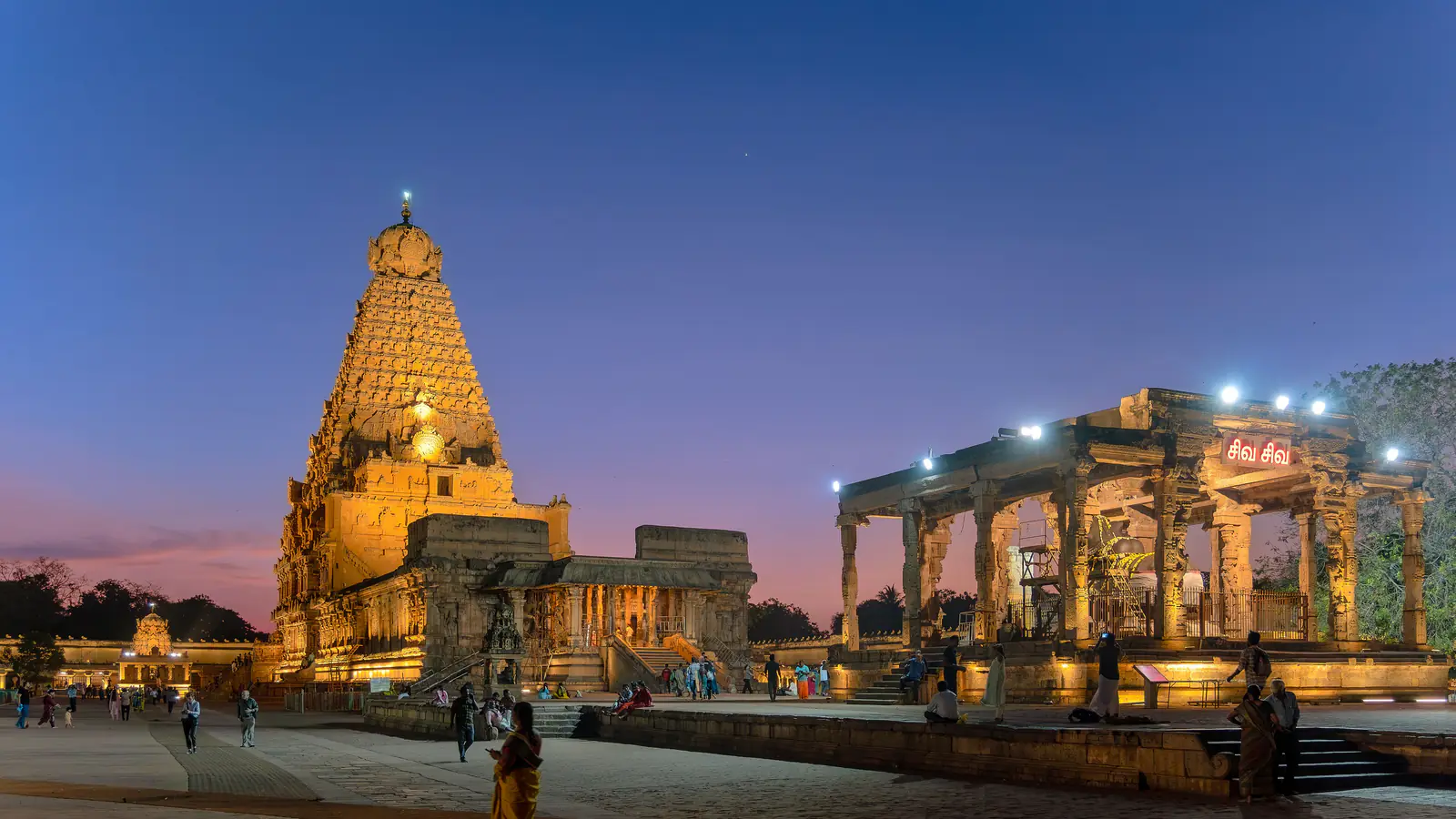
- Page 10 of 12Visiting a templeShoes off, hands folded, walk clockwise, receive prasad in the right hand — and ask when unsure.
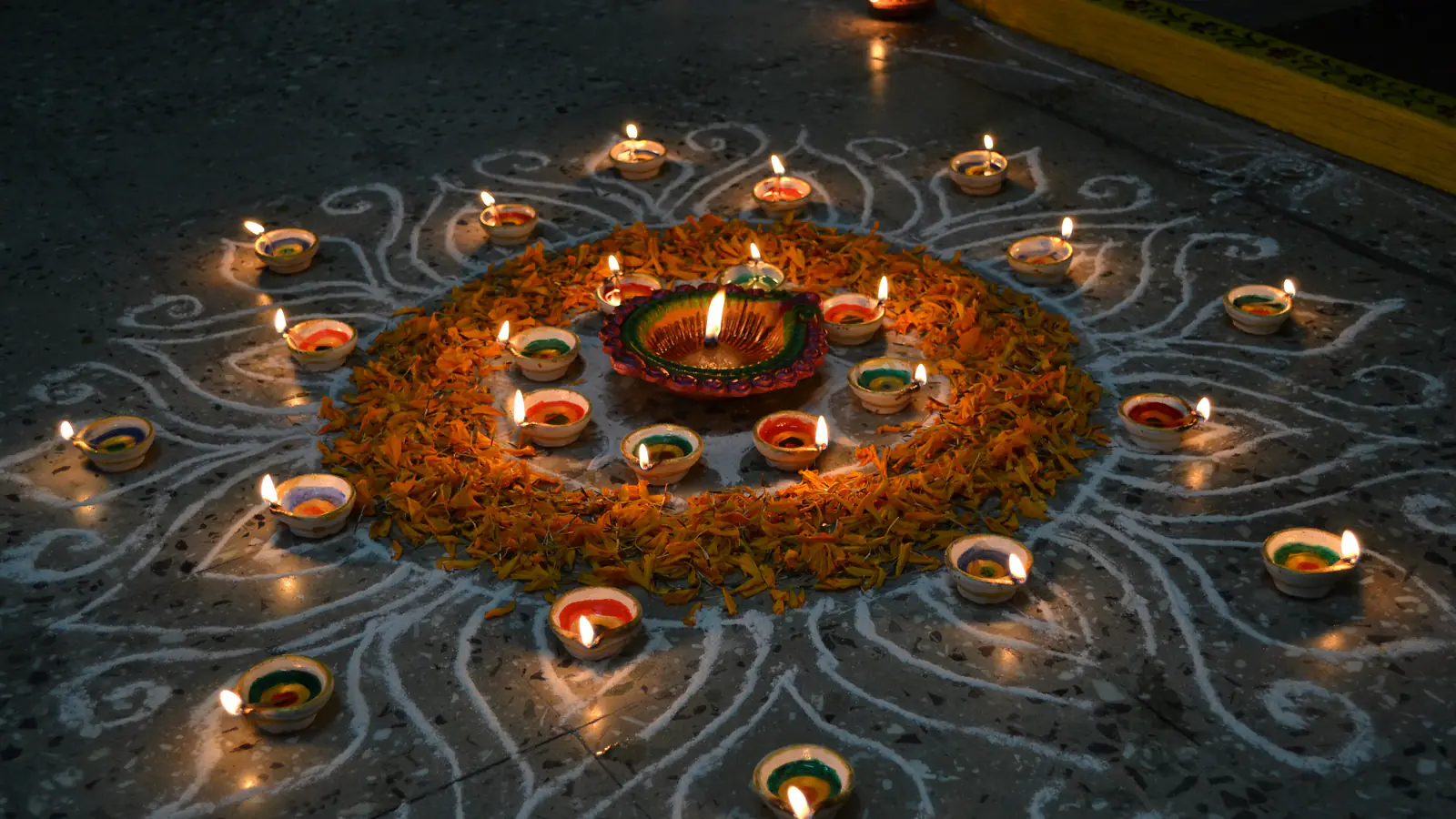
- Page 11 of 12Hinduism in everyday lifeNamaste, the lamp at dusk, fasting days, the family shrine — and the family's way is the right way for that home.
- Page 12 of 12How to use DharamkiraLearn in Deities; follow the year in Festivals; practise in Mantras, Meditation, Yoga, and Puja Guides; keep your own record in My sadhana.
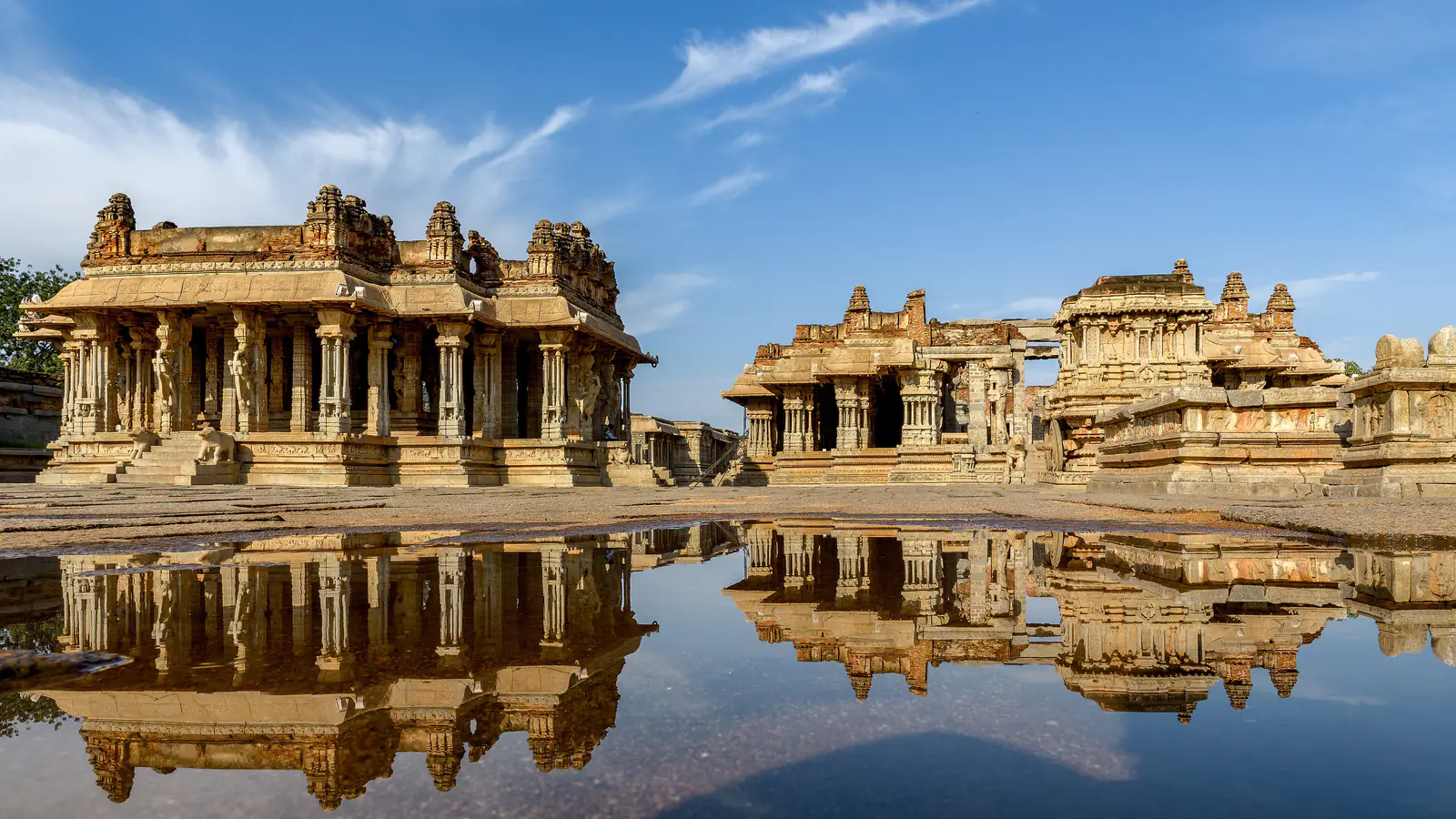
Photo: AjoyDutta1997 (edit: Aristeas)CC BY-SA 4.0CC BY-SA 4.0
7 days · 5 minutes a day
Then, seven days
One lesson and one five-minute practice a day. Light a lamp for each day you finish; the lamps stay lit on this device.
0 of 7 days done
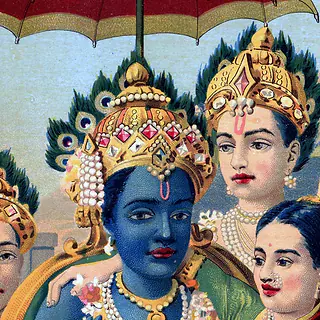
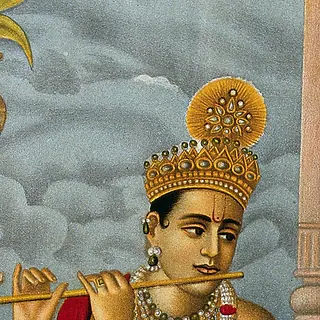
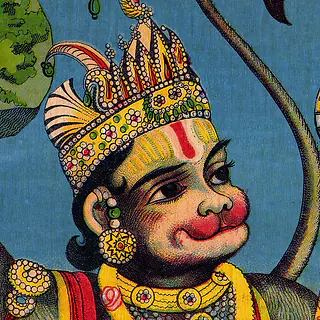
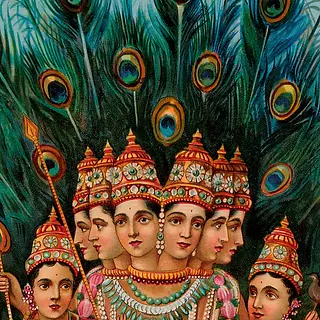
Begin day 1 →Fifteen names, one line each
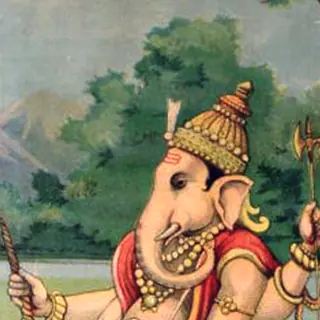
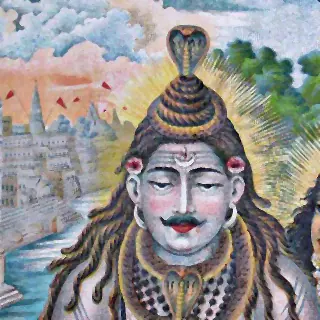
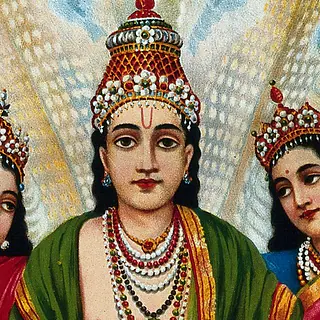
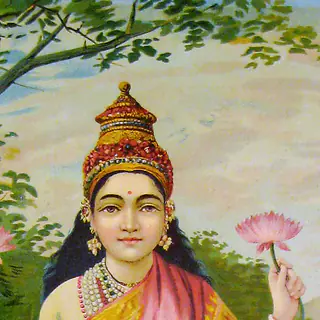
New to these words?
- Dharma
- What upholds: your duty from where you stand in life, and the order that keeps the world whole.
- Karma
- Action — and the principle that every action shapes what follows. Not fate, not punishment.
- Moksha
- Liberation: freedom from the cycle of rebirth and from the confusion that keeps it turning.
- Samsara
- The cycle of birth, death, and rebirth.
- Brahman
- The one reality behind everything — not a person in the sky, but the ground of all that is, including you.
- Ishta-devata
- Your chosen deity — usually the one your family keeps — the face through which you approach the divine.
- Puja
- Worship at home or temple — offering light, flowers, food and prayers to a deity.
- Mantra
- Sacred words or sounds, usually in Sanskrit, repeated to steady the mind and honour the divine.
- Jaap / Japa
- Repeating a mantra again and again — often 108 times — while keeping count.
- Mala
- A string of 108 beads used to count mantra repetitions with your fingers.
- Aarti
- Waving a lit lamp in slow circles before the deity while singing — the glowing finale of a puja.
- Prasad
- Food offered to the deity first and then shared by everyone — a blessing you can eat.
- Vrat
- A day of promise — often fasting or eating simply — kept for a deity or a loved one's wellbeing.
- Tithi
- A day of the Hindu moon calendar. Festival dates follow the moon, which is why they move each year.
- Panchang
- The traditional Hindu calendar-almanac that tells which tithi, star and auspicious times fall on each day.
- Murti
- The image of a deity in a temple or home shrine; treated as a living guest during worship.
- Avatar
- A descent of a deity into the world — Rama and Krishna are avatars of Vishnu.
- Shruti
- "What was heard": the Vedas and Upanishads, the texts with the highest authority.
- Smriti
- "What is remembered": the epics, the Puranas, and the law books — composed after the Vedas.
- Tilak
- The mark on the forehead — sandal, vermilion, or ash — worn after puja or as a blessing.
- Namaste
- Palms together, a small bow: "I bow to you." A greeting, a thank-you, and a goodbye.
- Mandir
- A Hindu temple — or the small shrine most homes keep on a shelf.
Photographs are by the photographers credited on each image and are listed on the About page. /about