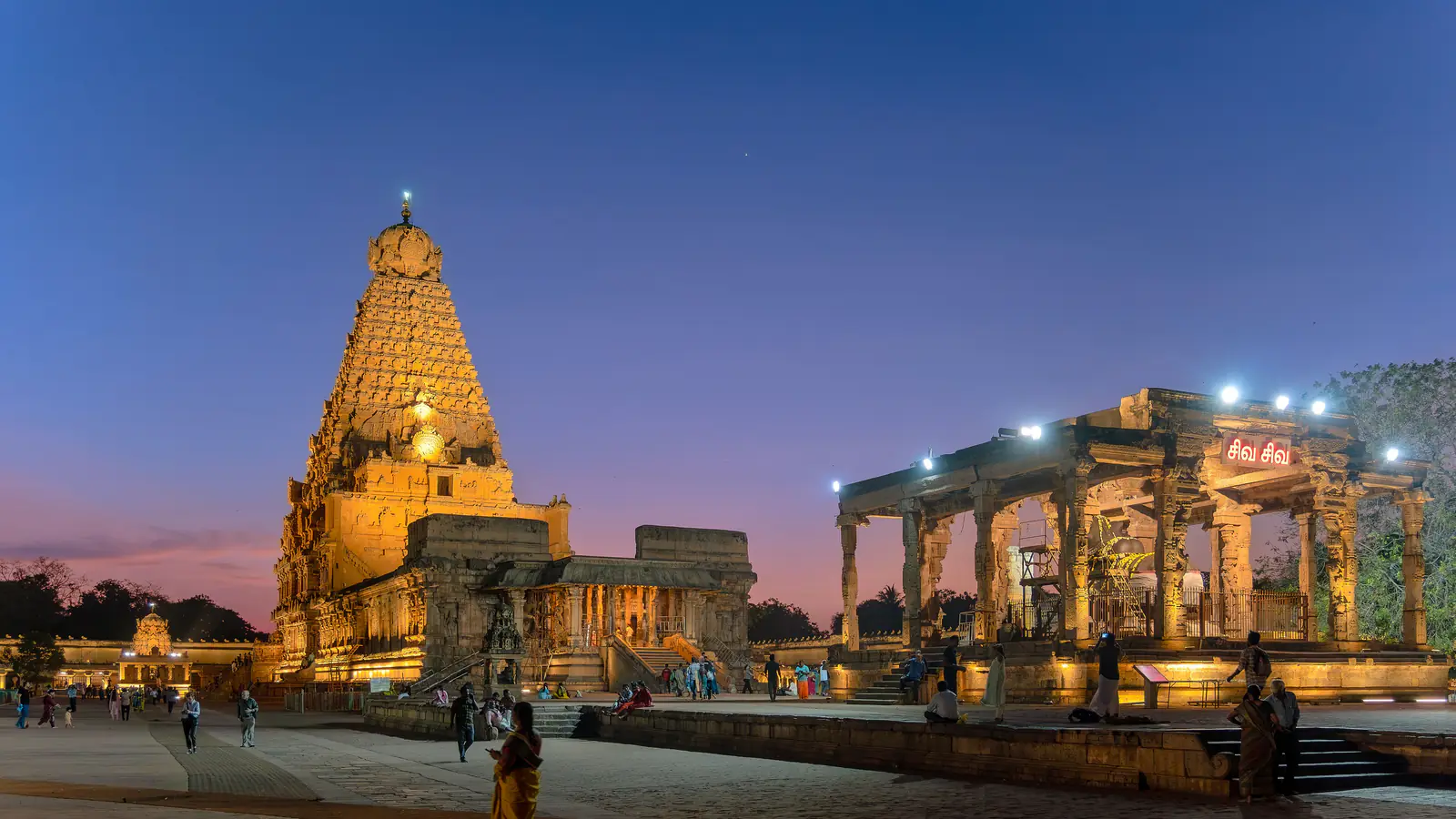
Visiting a temple
Shoes off, hands folded, walk clockwise, receive prasad in the right hand — and ask when unsure.
Most temples welcome visitors of any background. A few — Jagannath Puri and some temples in Kerala, for example — admit only Hindus, and a sign at the gate will say so. Dress modestly: shoulders and knees covered is safe everywhere. Some temples ask visitors to cover the head or to leave leather items outside; follow the notice.
Leave your shoes at the entrance. Wash your hands and feet if water is provided. Inside, walk clockwise around the shrine — pradakshina — keeping the deity on your right. Ring the bell if there is one; it announces your arrival. Stand before the murti, fold your hands, and say whatever you wish, silently. Do not touch the image unless invited, do not point your feet at it, and photograph only where allowed.
The priest may bring the aarti flame: cup your palms over it and touch them to your eyes. Prasad is received in the right hand, or the right over the left. A tilak on the forehead is a blessing, not a membership badge.
An offering to the temple's box is welcome and never required. Leave slowly. Most of what a temple asks of you is attention.
In the tradition's words
मातृदेवो भव । पितृदेवो भव । आचार्यदेवो भव । अतिथिदेवो भव ।
mātṛ-devo bhava, pitṛ-devo bhava, ācārya-devo bhava, atithi-devo bhava
Let your mother, your father, your teacher and your guest each be as a god to you.
See it
- shoes offat the door
- ring the bellyou have arrived
- walk clockwisepradakṣiṇā
- see, be seendarśana
- receiveprasāda, in the right hand
Where it lives

Sabha Mandap of the Sun Temple, Modhera, Gujarat
Photo: Bernard GagnonCC BY-SA 3.0CC BY-SA 3.0
Shore Temple, Mamallapuram, Tamil Nadu (8th century)
Photo: Bernard GagnonCC BY-SA 3.0CC BY-SA 3.0
Kedarnath Temple, Uttarakhand
Photo: Rohit SharmaCC BY-SA 4.0CC BY-SA 4.0
Dulhadeo Temple, Khajuraho, Madhya Pradesh
Photo: Marcin BiałekCC BY-SA 4.0CC BY-SA 4.0
Where this comes from
Living custom; practices differ by region and temple, and the temple's own notices take precedence over anything written here.