The scriptures, in one page
The Vedas at the top, the epics and Puranas beneath them, and the Gita as the book most people start with.
Hindu texts fall into two tiers. Shruti, "what was heard", is the Vedas: four collections (Rig, Sama, Yajur, Atharva), each with hymns, ritual commentary, and the Upanishads — the philosophical dialogues at the end. Shruti carries the highest authority. Smriti, "what is remembered", is everything composed afterwards: the epics, the Puranas, and the law books.
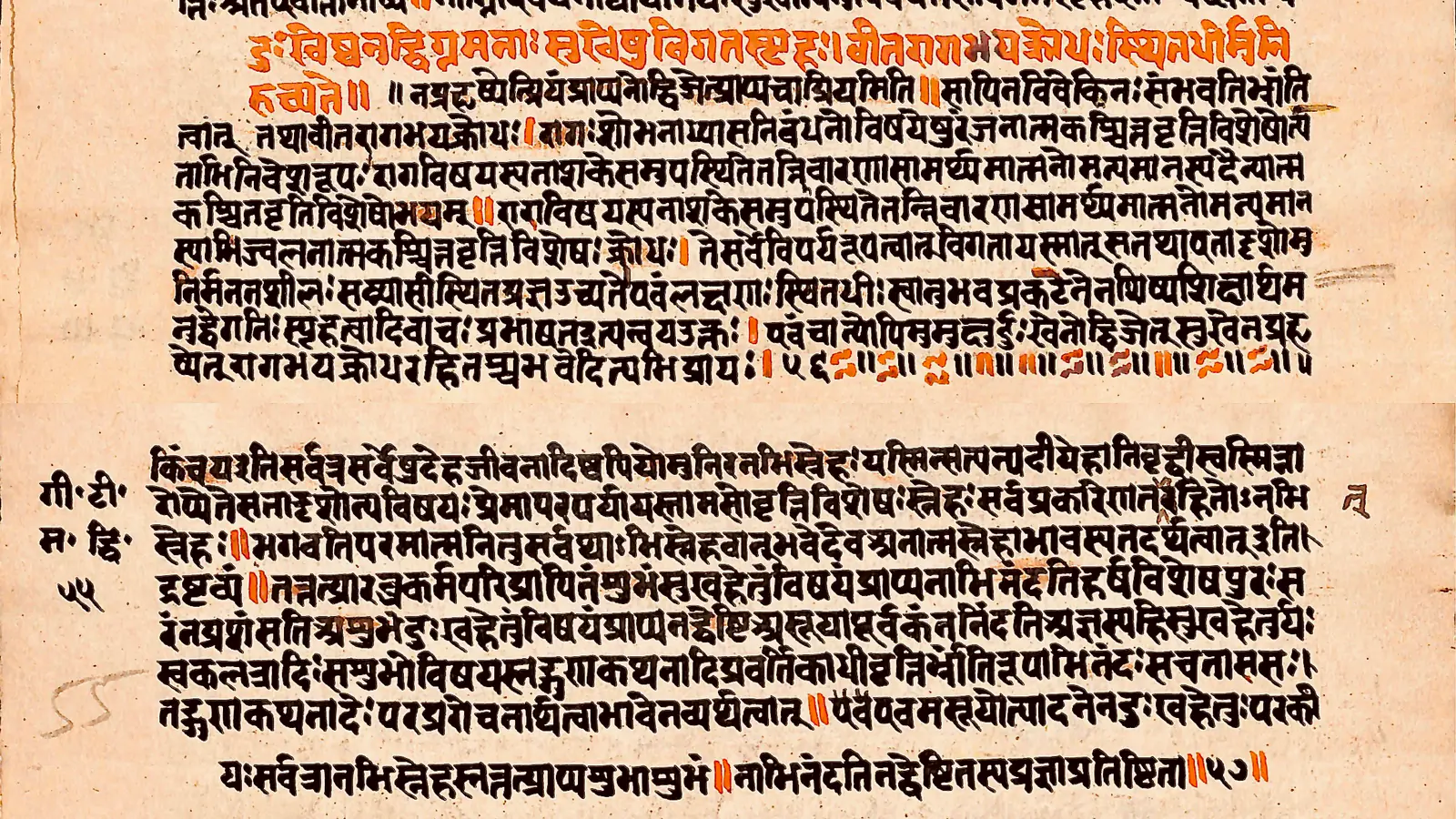
The two epics are the Ramayana (Valmiki's story of Rama, traditionally about 24,000 verses) and the Mahabharata (the war of the Kuru cousins, traditionally 100,000). The Bhagavad Gita — Krishna's teaching to Arjuna before the battle, 700 verses in 18 chapters — sits inside the Mahabharata and is the most widely read Hindu text.
The Puranas (the Shiva Purana, the Bhagavata Purana, the Devi Mahatmya inside the Markandeya Purana, and others) are where most of the deities' stories live. Devotional poetry in the regional languages — Tulsidas's Ramcharitmanas in Awadhi, the Tamil hymns of the Alvars and Nayanars, the songs of Mirabai and Kabir — is how most people actually meet the tradition.
No Hindu is expected to have read all of this. Start with the Gita, and read it slowly.
In the tradition's words
आ नो भद्राः क्रतवो यन्तु विश्वतः
ā no bhadrāḥ kratavo yantu viśvataḥ
Let noble thoughts come to us from every side.
See it
Śruti — “heard”
the Vedas; held to be revealed
- Ṛg Veda
- Sāma Veda
- Yajur Veda
- Atharva Veda
each in four layers
- Saṃhitā — hymns
- Brāhmaṇa — ritual
- Āraṇyaka — reflection
- Upaniṣad — philosophy
Smṛti — “remembered”
composed by people; read through tradition
- Itihāsa — Rāmāyaṇa, Mahābhārata (with the Bhagavad Gītā)
- Purāṇas — stories of the gods, cosmology
- Dharmaśāstra — codes of conduct
- Āgamas, Tantras — temple and ritual manuals
- Sūtras and later works — e.g. the Yoga Sūtra
Where this comes from
The shruti/smriti division and the verse counts are the traditional ones; modern critical editions of the Mahabharata contain fewer verses (the Poona critical edition is usually reckoned at about 74,000).