Festivals, and why the dates move
Hindu festivals follow the moon, so they land on different days each year.
Hindu festivals follow a lunisolar calendar. Months are counted by the moon, and a leap month (adhika masa) is added roughly every 32 months to keep them in step with the seasons. That is why Diwali falls in October some years and November in others. Each day of the lunar month is a tithi, and most festivals are fixed to one: Diwali on the new moon of Kartik, Holi on the full moon of Phalguna.
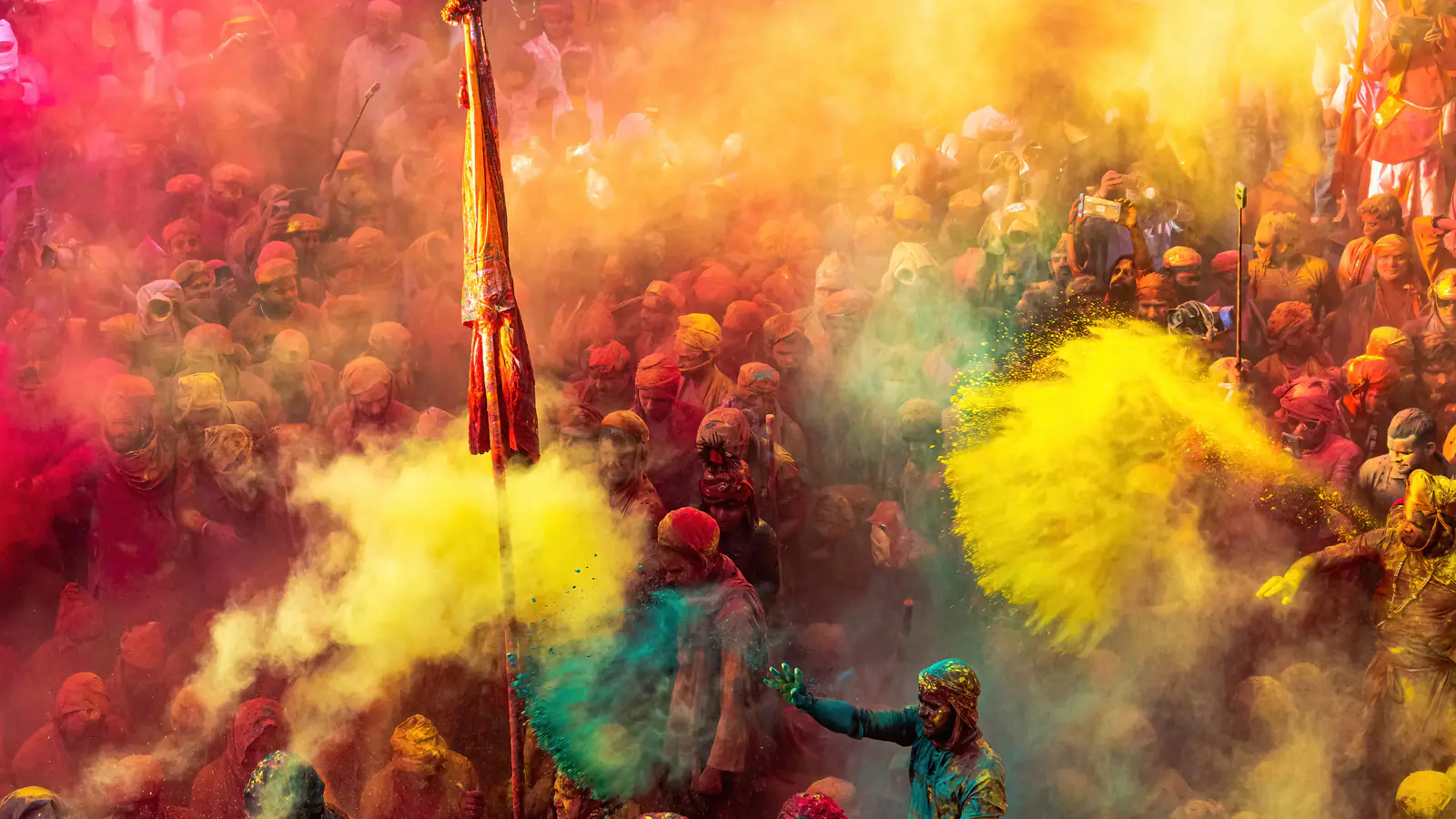
The ones you will hear about first: Diwali (lamps, Lakshmi, new beginnings), Holi (colours, spring, Krishna), Navratri and Durga Puja (nine nights of the Goddess), Ganesh Chaturthi (Ganesha's ten-day visit), Janmashtami (Krishna's birth), Maha Shivratri (Shiva's night), Raksha Bandhan (brothers and sisters), and the harvest days — Pongal, Makar Sankranti, Baisakhi.
Many days are also vrats: fasts kept for a deity or for a family member's wellbeing. Fasting rules vary from strict to symbolic, and nobody who is ill, pregnant, elderly, or very young is expected to keep a hard fast.
Dharamkira's calendar shows every festival's next date, checked against several panchangs, with a countdown, its story, and the puja that goes with it.
In the tradition's words
दीपज्योतिः परब्रह्म दीपज्योतिर्जनार्दनः । दीपो हरतु मे पापं दीपज्योतिर्नमोऽस्तु ते ॥
Dīpa-jyotiḥ parabrahma dīpa-jyotir janārdanaḥ, dīpo haratu me pāpaṁ dīpa-jyotir namo'stu te
The lamp's light is the highest reality; may the lamp take my faults away. Said while lighting the evening lamp.
See it
Where it lives
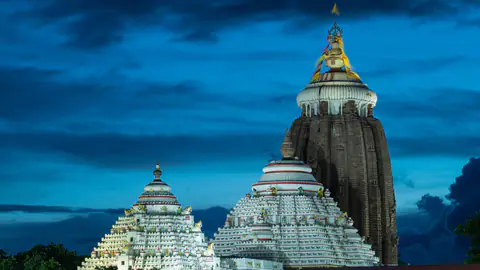
Jagannath Temple, Puri, at dusk
Photo: KalyanpuranandCC BY-SA 4.0CC BY-SA 4.0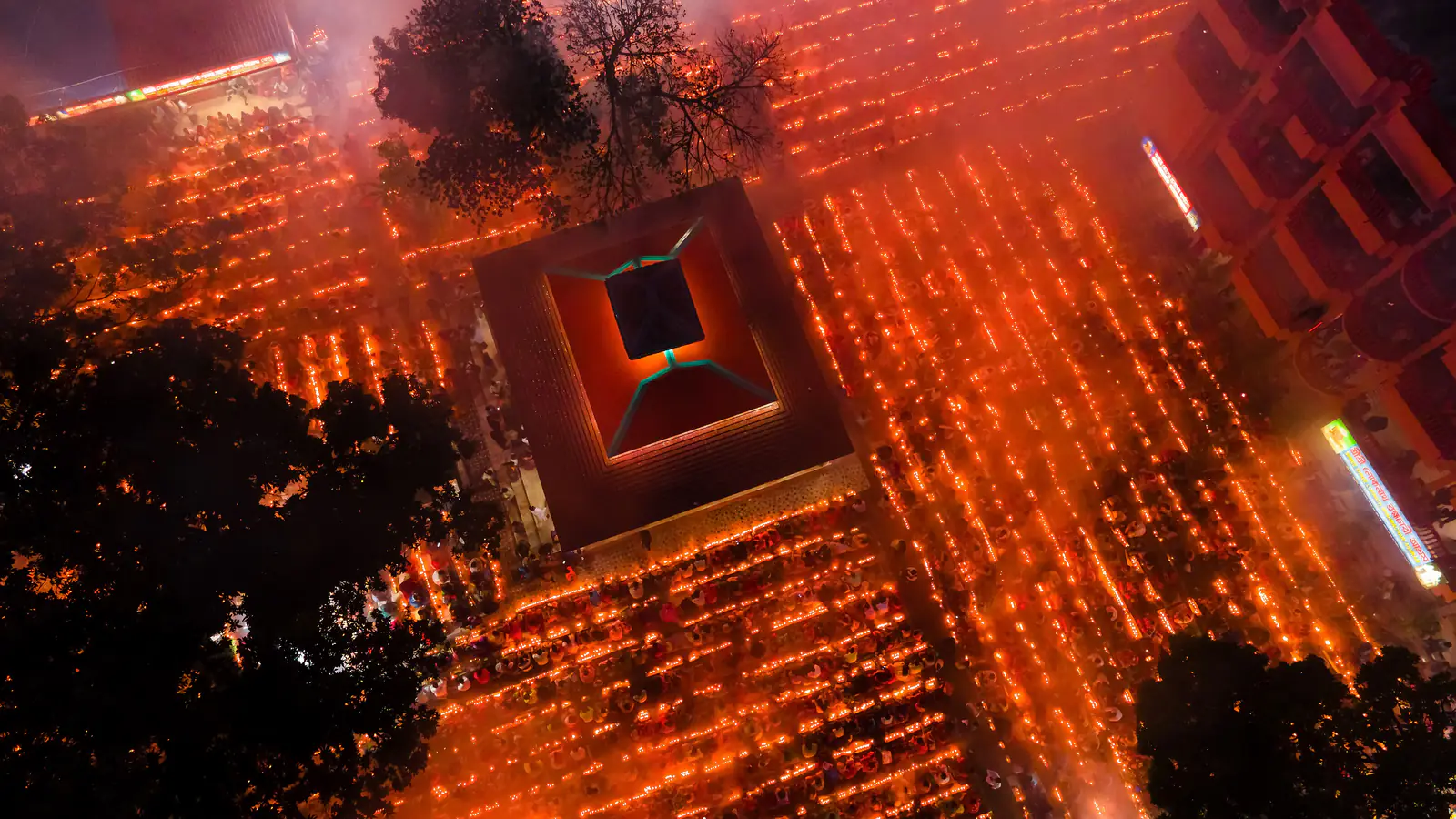
Thousands of oil lamps, Rakher Upobash, Barodi Temple, Dhaka
Photo: Muhammad Amdad Hossain (edit: W.carter)CC BY-SA 4.0CC BY-SA 4.0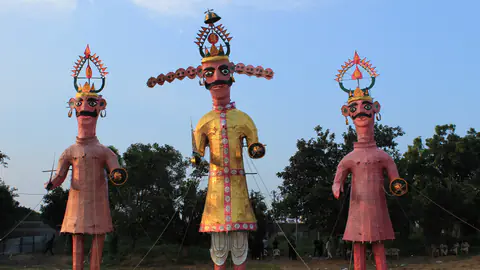
Effigies of Ravana, Kumbhakarna and Meghnad before Dussehra
Photo: SnehrashmiCC BY-SA 4.0CC BY-SA 4.0
Where this comes from
Calendar mechanics as used by the traditional panchangs (tithi, adhika masa); the site's dates are cross-checked against several published panchangs for 2026 and 2027.