Hinduism in everyday life
Namaste, the lamp at dusk, fasting days, the family shrine — and the family's way is the right way for that home.
Namaste — palms together, a small bow — means "I bow to you". It greets, thanks, and says goodbye. Touching an elder's feet (pranam) asks for their blessing. A tilak or bindi on the forehead marks the point between the eyebrows that yogic texts treat as the seat of attention; it is worn after puja, at festivals, or every day.
Food carries meaning. Many Hindus are vegetarian and many are not; most avoid beef because the cow is honoured as a giver. Food offered to the deity becomes prasad. Fasting on chosen days is common — Mondays for Shiva, Tuesdays for Hanuman, Ekadashi for Vishnu — and is always kept within one's health.
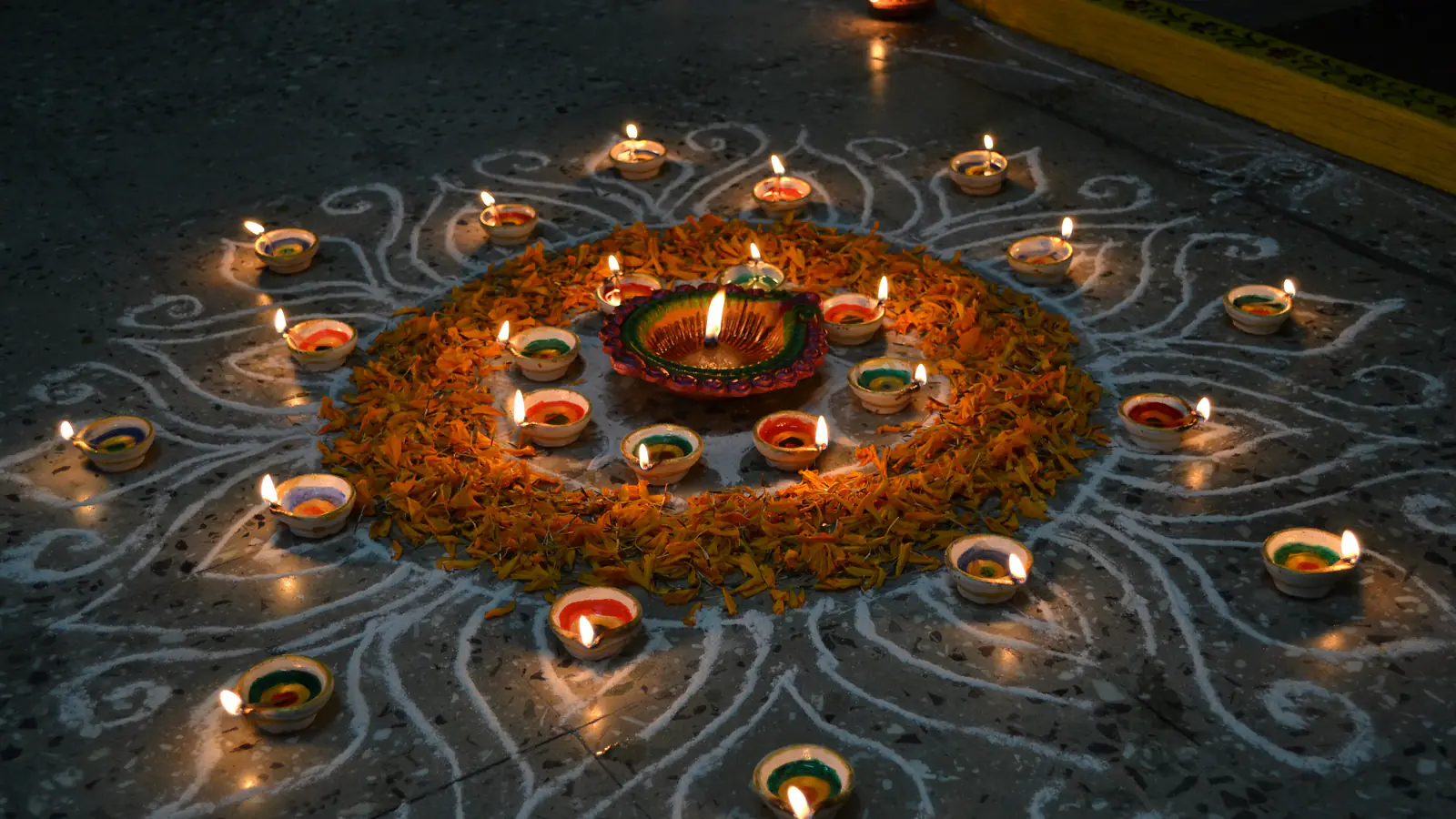
Homes usually keep a small shrine and light a lamp at dawn and dusk. A new house, a long trip, a wedding, an exam: each may get a muhurat, an auspicious time from the panchang, and a short puja.
All of this varies by region, community, and family, and the family's way is the right way for that home. If you are joining a household, ask. People are glad to explain, and asking is itself a form of respect.
In the tradition's words
सर्वे भवन्तु सुखिनः सर्वे सन्तु निरामयाः । सर्वे भद्राणि पश्यन्तु मा कश्चिद्दुःखभाग्भवेत् ॥
Sarve bhavantu sukhinaḥ sarve santu nirāmayāḥ, sarve bhadrāṇi paśyantu mā kaścid duḥkha-bhāg bhavet
May all be happy, may all be free of illness, may all see what is good, may no one suffer.
Where this comes from
Living custom across regions. The ajna point is described in the Hatha Yoga and Tantric literature; the vaar–deity pairings are the common North Indian ones and vary elsewhere.