Puja: how worship works
The deity is treated as an honoured guest — invited, seated, bathed, dressed, fed, and shown a lamp.
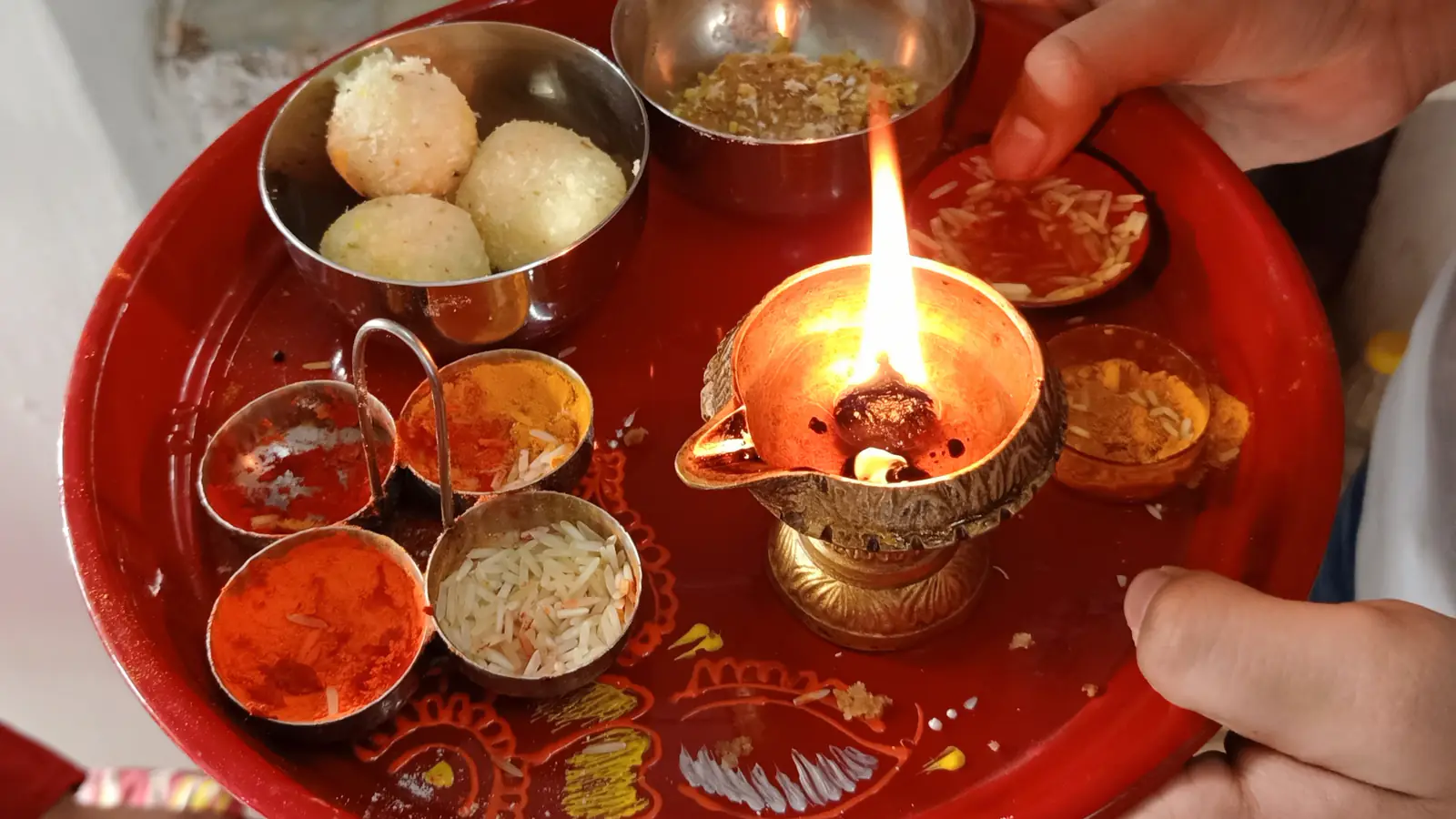
A puja is hospitality. The deity, present in a murti (image) or a symbol, is welcomed like a guest of honour: invited in, offered a seat, water, a bath, fresh clothes, fragrance, flowers, incense, a lamp, and food. Ritual manuals list sixteen such offerings (the shodashopachara); a short home puja keeps five — fragrance, flowers, incense, lamp, and food.
You do not need a priest. Most Hindu worship happens at a home shrine: a shelf or small cabinet with images, a lamp, and a bell. The sequence is simple: clean the space, light the lamp, offer what you have, say a mantra or a prayer in your own words, then end with aarti — the lamp waved in slow circles while a hymn is sung. Food offered to the deity first is then shared as prasad.
What matters is bhava — the feeling behind the act. Krishna says a leaf, a flower, a fruit, or water, offered with devotion, is accepted (Gita 9.26). A flower offered with attention is a complete puja; an elaborate one done absent-mindedly is not.
Every puja guide on Dharamkira lists what to gather and walks the steps in order, each mantra written out in full.
In the tradition's words
पत्रं पुष्पं फलं तोयं यो मे भक्त्या प्रयच्छति । तदहं भक्त्युपहृतमश्नामि प्रयतात्मनः ॥
patraṃ puṣpaṃ phalaṃ toyaṃ yo me bhaktyā prayacchati, tad ahaṃ bhakty-upahṛtam aśnāmi prayatātmanaḥ
A leaf, a flower, a fruit, water — whoever offers these with devotion, that gift of a clear heart I accept.
See it
- inviteāvāhana
- bathesnāna
- adornpuṣpa, vastra
- feednaivedya
- lightdīpa, ārati
- shareprasāda
Where this comes from
The sixteen upacharas are listed in Puranic and Agamic ritual texts and in the standard household manuals derived from them. Bhagavad Gita 9.26.