The gods, and why there are many
One reality, many faces — and how to choose one to start with.
Today's lesson
"Truth is one; the wise call it by many names" (Rigveda 1.164.46). That line is the key to the crowd of deities. Each one is a way of approaching the same reality with a face you can look at and a name you can call.
Most families keep one deity closest — the ishta-devata, usually inherited — and greet the others on their days: by common practice Monday is Shiva's, Tuesday Hanuman's, Friday the Goddess's, and Ganesha is worshipped first before any undertaking. Nobody is asked to reject the rest.
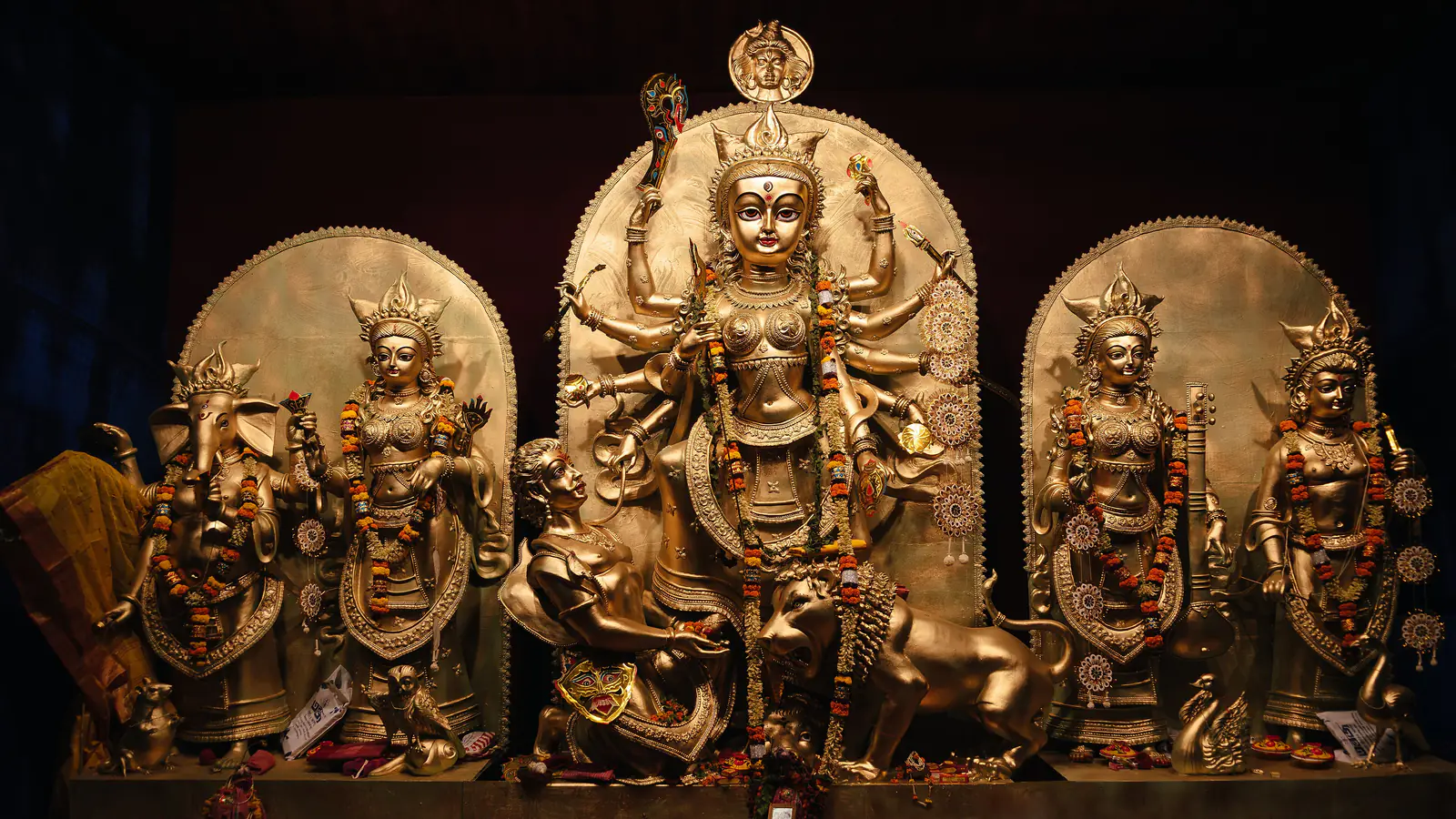
The deities are known by their attributes. Ganesha's elephant head and single tusk; Shiva's trident, crescent moon, and the Ganga in his hair; Vishnu's conch and discus; Lakshmi on her lotus with the elephants; Saraswati's veena; Durga's lion; Hanuman's mace. The attributes are a language: each carries a meaning the tradition has explained for centuries, and once you can read them, no temple is a puzzle.
If you want somewhere to begin, begin with Ganesha. He is the first-worshipped, his stories are short and warm, and his mantra is the one most children learn first.
In the tradition's words
यो यो यां यां तनुं भक्तः श्रद्धयार्चितुमिच्छति । तस्य तस्याचलां श्रद्धां तामेव विदधाम्यहम् ॥
yo yo yāṃ yāṃ tanuṃ bhaktaḥ śraddhayārcitum icchati, tasya tasyācalāṃ śraddhāṃ tām eva vidadhāmy aham
Whatever form a devotee wishes to worship with faith, that very faith I make steady.
Today's practice
about 5 minutesRead one tale of Ganesha
- Open Ganesha's page and read "Why Ganesha is God".
- Read the tale "The race around the world".
- Look at the painting and find the attributes the page explains.
Sit with this
Which deity's story stayed with you — and what does that tell you about what you are looking for?