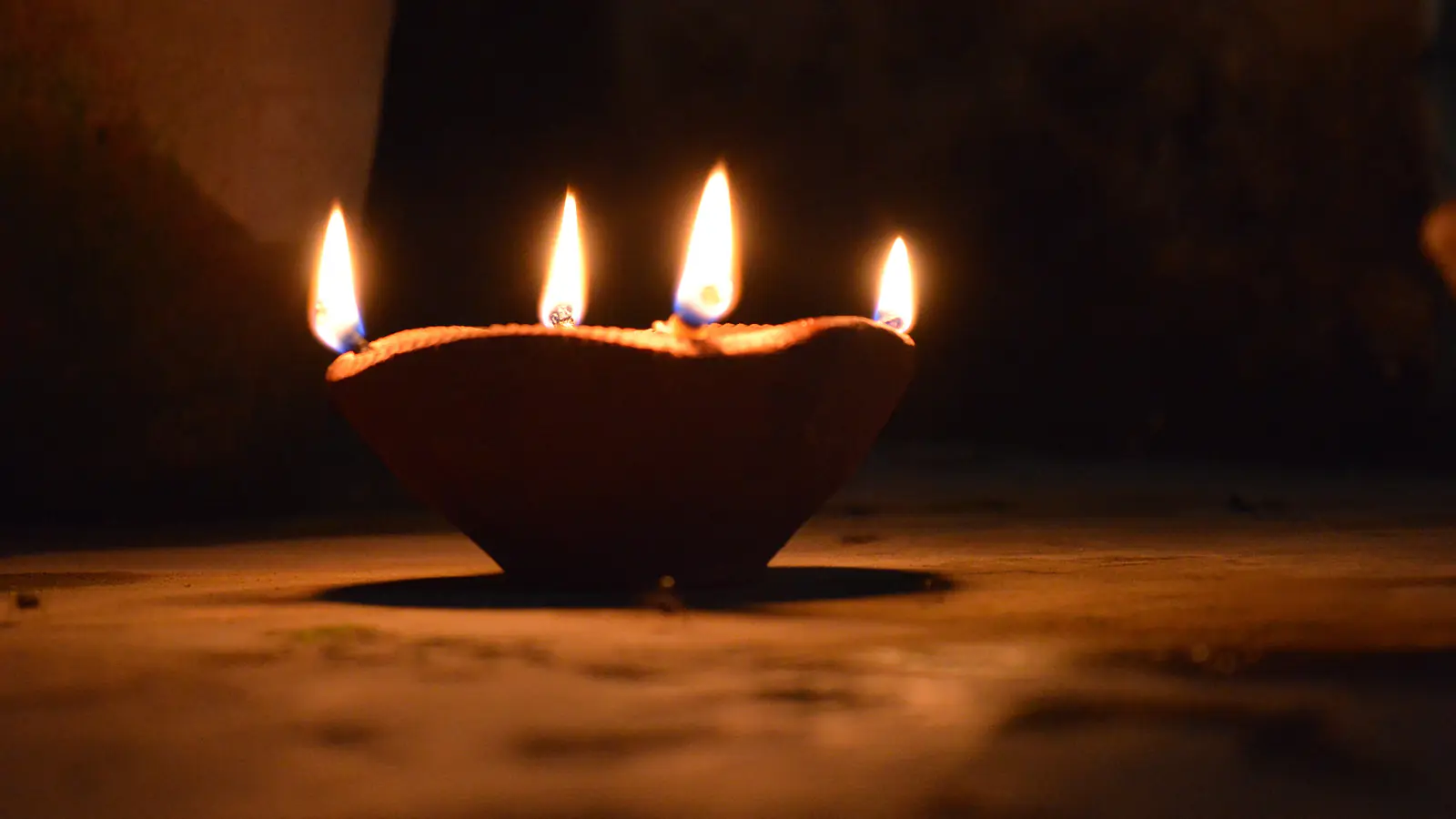
Light: the lamp and the aarti
Why every puja ends with a flame, and how to do the simplest one.
Today's lesson
A puja is hospitality: the deity is treated as a guest — invited, seated, bathed, dressed, fed, and finally shown a light. That last act is the aarti. A lamp is waved in slow clockwise circles before the image while a short hymn is sung; then the flame is carried round, and each person cups their hands over it and touches them to their eyes.
The flame stands for the removal of darkness — the ordinary kind, and the kind inside. "Lead me from darkness to light" is one of the oldest prayers in the tradition (Brihadaranyaka Upanishad 1.3.28). The lamp itself is usually a diya: a small clay or brass bowl with a cotton wick in ghee or oil.
You need almost nothing. A lamp, a match, an image or even a picture on a phone, and one hymn. The most common aarti verse for Shiva begins "Karpura Gauram" — "white as camphor, the embodiment of compassion" — and takes twenty seconds to say. Food offered before the lamp becomes prasad and is shared afterwards.
Order matters a little: offering before aarti, aarti before prasad. Attention matters more.
In the tradition's words
असतो मा सद्गमय । तमसो मा ज्योतिर्गमय । मृत्योर्मा अमृतं गमय ॥
Asato mā sad gamaya, tamaso mā jyotir gamaya, mṛtyor mā amṛtaṁ gamaya
From the unreal to the real, from darkness to light, from death to what does not die.
Today's practice
about 5 minutesThree minutes with a flame
- Light a real lamp or candle if you safely can; otherwise open the candle room on the site.
- Sit for three minutes with your eyes on the flame.
- Read Karpura Gauram once, slowly, with its meaning.
Sit with this
What did three minutes of looking at one small light do to the pace of your thoughts?