
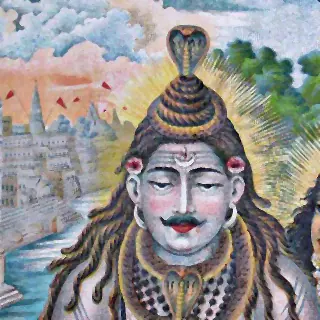
Shiva
Karpura Gauram
कर्पूरगौरं करुणावतारं संसारसारं भुजगेन्द्रहारम् । सदा वसन्तं हृदयारविन्दे भवं भवानीसहितं नमामि ॥
Karpūra-gauraṁ karuṇāvatāraṁ saṁsāra-sāraṁ bhujagendra-hāram, sadā vasantaṁ hṛdayāravinde bhavaṁ bhavānī-sahitaṁ namāmi
Simple reading: Kar-poo-ra gau-ram ka-ru-naa-va-taa-ram, san-saa-ra saa-ram bhu-ja-gen-dra haa-ram, sa-daa va-san-tam hri-da-yaa-ra-vin-de, bha-vam bha-vaa-nee sa-hi-tam na-maa-mi
About this mantra
The verse that ends the aarti in most Shiva temples and in many homes — and is often sung after the aarti of other deities too. Everything before its last word describes the one being bowed to; the last word, namāmi, is the bow.
Meaning
I bow to Bhava (Shiva), together with Bhavani — white as camphor, the embodiment of compassion, the heart of all existence, garlanded with the king of serpents, ever dwelling in the lotus of the heart. Sung as the lamp is set down, the verse does one more thing: it moves Shiva from the murti to the hridaya-aravinda — the heart's lotus — so the worshipper leaves the temple carrying the deity home.
When to recite it
The aarti-closing verse — sung as the flame circles at the end of any Shiva puja, on Mondays and Pradosh, and to settle the house after evening worship.
Word by word
- कर्पूरगौरंkarpūra-gauraṁ
- white as camphor
- करुणावतारंkaruṇāvatāraṁ
- the embodiment of compassion
- संसारसारंsaṁsāra-sāraṁ
- the heart of all existence
- भुजगेन्द्रहारम्bhujagendra-hāram
- garlanded with the king of serpents
- सदा वसन्तं हृदयारविन्देsadā vasantaṁ hṛdayāravinde
- ever dwelling in the heart's lotus
- भवं भवानीसहितं नमामिbhavaṁ bhavānī-sahitaṁ namāmi
- I bow to Bhava together with Bhavani
Source: Traditional āratī verse of the Śiva worship corpus