
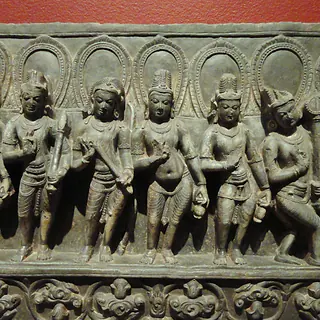
Navagraha
Ketu — the south node
ॐ स्रां स्रीं स्रौं सः केतवे नमः
Simple reading
Om sraam sreem sraum sah ke-ta-ve na-mah
Oṁ srāṁ srīṁ srauṁ saḥ ketave namaḥ
About this mantra
The bīja-mantra of Ketu, the Moon's south node: the second shadow-graha, the headless body of the same eclipse story, with no weekday of its own. Jyotisha counts Ketu as the significator of detachment, moksha and hidden insight.
Meaning
Om, with the seed-syllables srāṁ srīṁ srauṁ saḥ, salutations to Ketu, the south node: the flag of what has already been lived. Ketu strips away. The jaap asks that the stripping be liberation rather than loss: detachment that opens into insight and, finally, into moksha.
Learn it by heart
Say the first line until it comes without reading, then add the next line and say both, until the whole mantra comes on its own.
Whole mantra
This mantra is a single line. Learn it whole, then add it to your review deck so it comes back for a check.
ॐ स्रां स्रीं स्रौं सः केतवे नमः
Oṁ srāṁ srīṁ srauṁ saḥ ketave namaḥ
0not said yet
Aim for eleven. Stop reading as soon as the whole mantra comes on its own.
Progress stays on this device.
When to recite it
Counted around eclipses and in graha-shanti; kept by those practising detachment: endings accepted, losses digested, moksha sought.
Word by word
- ॐoṁ
- the primordial sound
- स्रां स्रीं स्रौं सःsrāṁ srīṁ srauṁ saḥ
- the bīja (seed) syllables of this graha
- केतवेketave
- to Ketu
- नमःnamaḥ
- I bow, salutations
Source: Navagraha bīja-mantra tradition (jyotiṣa / graha-śānti practice)
Note: Given here in its commonly used form; wording can vary slightly between family and regional traditions.