
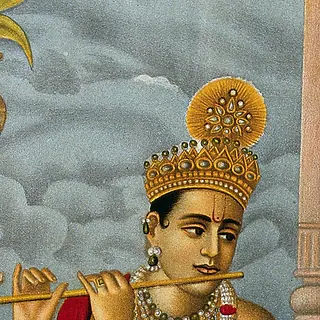
Krishna
Hare Krishna maha-mantra
हरे कृष्ण हरे कृष्ण कृष्ण कृष्ण हरे हरे । हरे राम हरे राम राम राम हरे हरे ॥
Hare Kṛṣṇa Hare Kṛṣṇa, Kṛṣṇa Kṛṣṇa Hare Hare, Hare Rāma Hare Rāma, Rāma Rāma Hare Hare
Simple reading: Ha-re krish-na ha-re krish-na, krish-na krish-na ha-re ha-re, ha-re raa-ma ha-re raa-ma, raa-ma raa-ma ha-re ha-re
About this mantra
The maha-mantra — sixteen names in a single garland, given in the Kali-Santarana Upanishad as the chant for this age.
Meaning
Hare, Krishna, Rama — three names woven sixteen times into one garland. Hare is read as the call to Hari, who takes sorrow away, or — in the Gaudiya reading — to Hara, the divine energy, Radha; Krishna, the all-attractive; Rama, the reservoir of joy. There is no request anywhere in the mantra: it is pure address — the practice of calling the beloved by name until the calling itself becomes the meeting.
When to recite it
The anytime kirtan — walking, cooking, waiting; sung in groups and counted alone on beads. Janmashtami and Ekadashi intensify it; no day is wrong for it.
Word by word
- हरेhare
- O Hari, remover of sorrow; in the Gaudiya reading, O Hara — Radha
- कृष्णkṛṣṇa
- the all-attractive one
- रामrāma
- the delighter, source of joy
Source: Kali-Santaraṇa Upaniṣad
Note: The Kali-Santarana Upanishad gives the two halves in the other order — Hare Rama first, Hare Krishna second. The order given here, Hare Krishna first, is the Chaitanya (Gaudiya) tradition's and the one most kirtans follow.